Case Study: How We Helped a Mexican Mezcal Brand Turn a Complex Bottle Idea into a Manufacturable Product
Blog July 5, 2026
In 2025, a mezcal producer from Oaxaca, Mexico approached Hannova Glass with an ambitious vision.
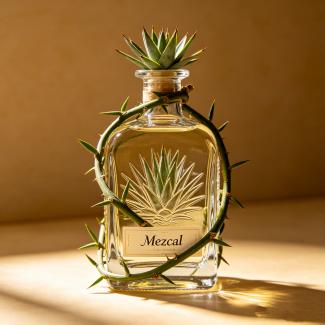
The customer wanted to create a completely unique bottle inspired by the agave plant — a design that would stand out on shelves and become part of the brand’s identity.
The challenge was that the design was provided as a concept image rather than a production-ready engineering drawing.
Like many new product launches, the idea looked impressive on screen, but significant work was required before it could become a real glass bottle.
Challenge 1: Transforming a Concept into a Manufacturable Bottle
After reviewing the design, our engineering team identified several potential production risks.
The bottle featured:
- Deep relief leaf patterns
- Irregular body geometry
- Decorative medallion
- Custom closure
To ensure structural strength and production feasibility, we recommended increasing the bottle weight from 600g to 680g.
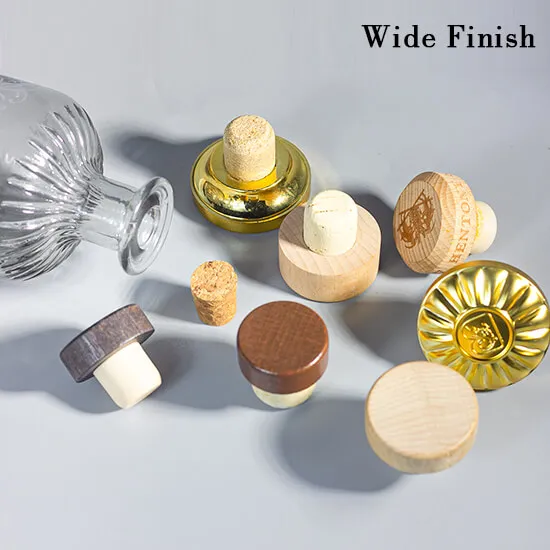
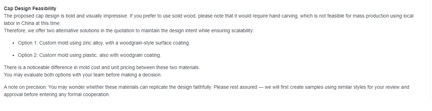
We also proposed alternative solutions for the cap design because the original carved wood concept would be difficult to mass produce consistently.
Challenge 2: Protecting the Customer’s Intellectual Property
The customer was concerned about design ownership and confidentiality.
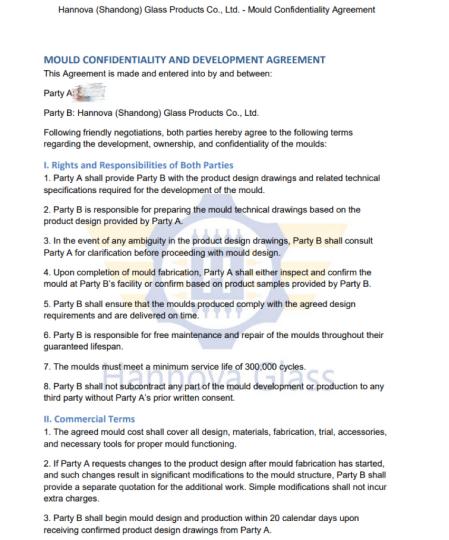
Before mold production began, Hannova Glass signed a confidentiality agreement and formally confirmed that:
- The mold would belong exclusively to the customer
- The design would not be reproduced for other brands
- All project information would remain confidential
This step gave the customer confidence to move forward with mold development.
Challenge 3: Ensuring Every Detail Was Correct Before Mold Production
As the project progressed, multiple rounds of design revisions were required.
The customer requested:
- Dedicated flat areas for front and back labels
- Precise placement of decorative leaf patterns
- Legal labeling zones required by local regulations
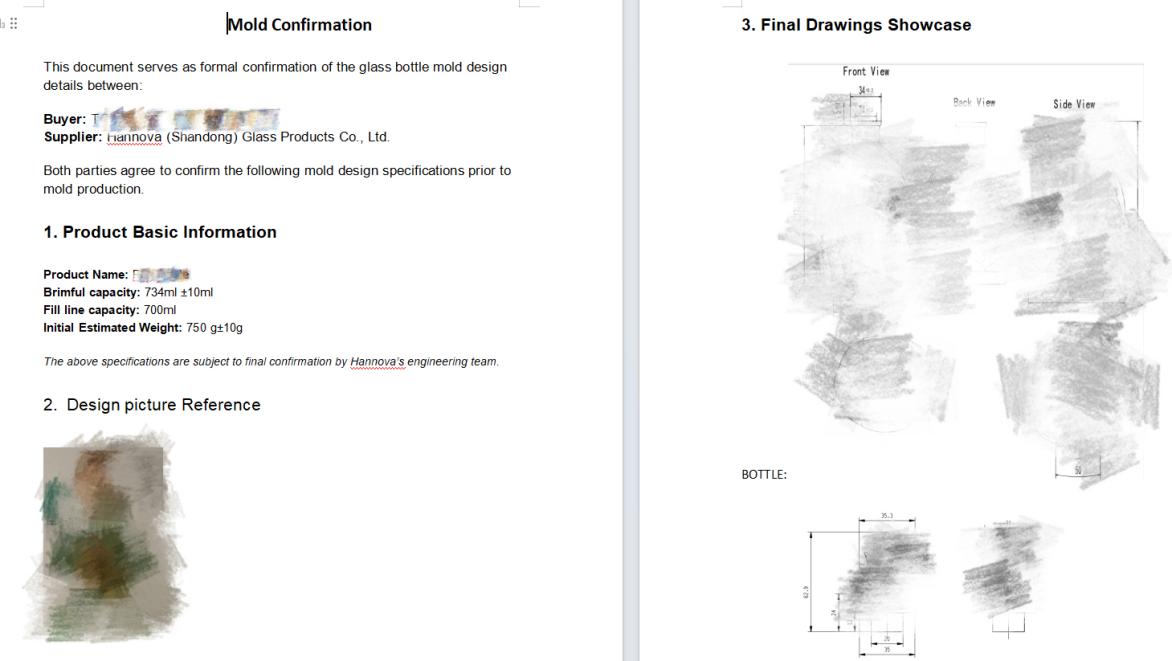
To avoid misunderstandings and reduce production risk, we created:
- Technical drawings
- 3D renderings
- A Mold Confirmation Document
This allowed both teams to review every detail before mold manufacturing began.
Challenge 4: Solving Design Accuracy Issues
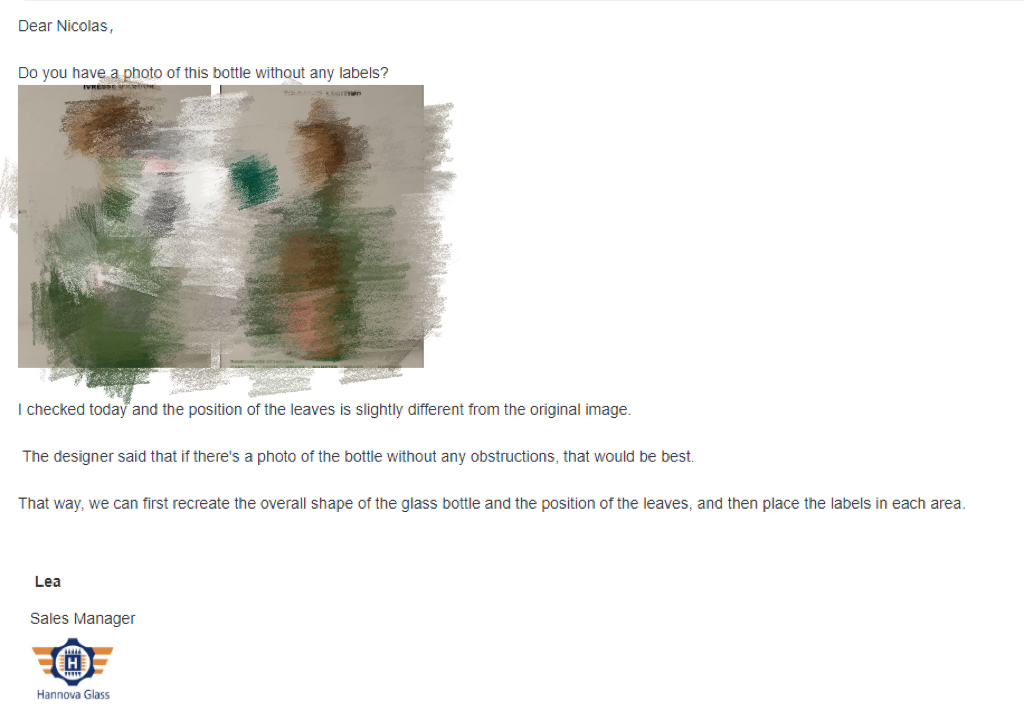
During the review process, our designer noticed that the leaf positions shown in the reference images were not perfectly aligned with the original concept.
Instead of proceeding and risking an incorrect mold, we contacted the customer and requested additional reference images.
After receiving further information, our team updated the 3D renderings and adjusted the leaf placement to better match the brand’s vision.
Several rounds of communication helped ensure that the final design reflected the customer’s expectations.
Final Result
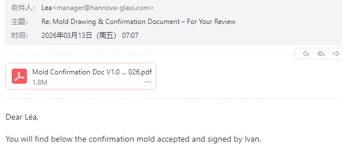
After reviewing the final renderings and mold documents, the customer formally approved and signed the Mold Confirmation Document.
The project then moved successfully into mold production.
What began as a creative concept was transformed into a manufacturable glass bottle through collaboration between the customer, designers, engineers, and production specialists.
What This Project Demonstrates
Custom bottle development is rarely a simple process.
Successful projects require:
- Engineering expertise
- Clear communication
- Intellectual property protection
- Structured approval procedures
- A willingness to solve problems before they become costly mistakes
At Hannova Glass, our role is not simply to manufacture bottles.
Our goal is to help customers transform ideas into products that can be produced efficiently, safely, and successfully.